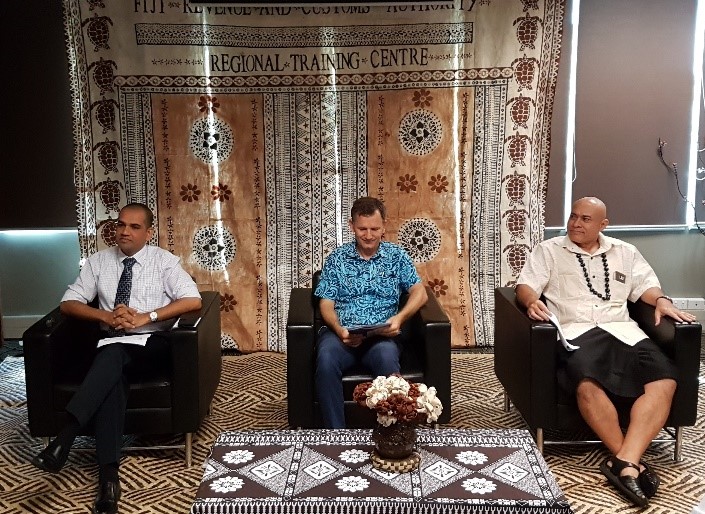
The OCO Executive Regional Workshop on Customs Modernisation and Reforms was held at the WCO Regional Training, Fiji Revenue and Customs Authority Suva, Fiji from 21-25 November2016. The seminar was organized and hosted by the Oceania Customs Organisation and attended by Heads of Customs from 18 of the member administrations.
The panelists and presenters consisted of representatives from World Customs Organisation, New Zealand Customs, International Monetary Fund, UNCTAD and World Bank. The tenet was to help Customs Executives to develop their management skills, further aiming to contribute to the organization development and modernization of their respective administrations.
The 5-day workshop adopted a mixed training methodology such as presentation, group and plenary discussion. One of the key outcomes from the discussions is that the core functions of Customs remained unchanged (revenue collection, border protection, trade facilitation), however Customs must change its approach through innovative ways vis-a-vis modernizing customs processes and application of risk management to customs control. Furthermore, global and regional imperatives have reinforced the need for responsive customs organizations.
The participants acknowledged that capacity building must be at the center of the customs reforms and to ensure successful and sustainable capacity building it is fundamental to prioritize and sequence reforms actions and continuously assess the Customs Administration capacity to cope with the changes implemented.