Home » About » Organisational Structure

Organisational Structure

OCO organizational structure provides the foundation on which standard operating procedures and activities such as task allocation, coordination, and supervision are directed toward the achievement of OCO organizational aims.

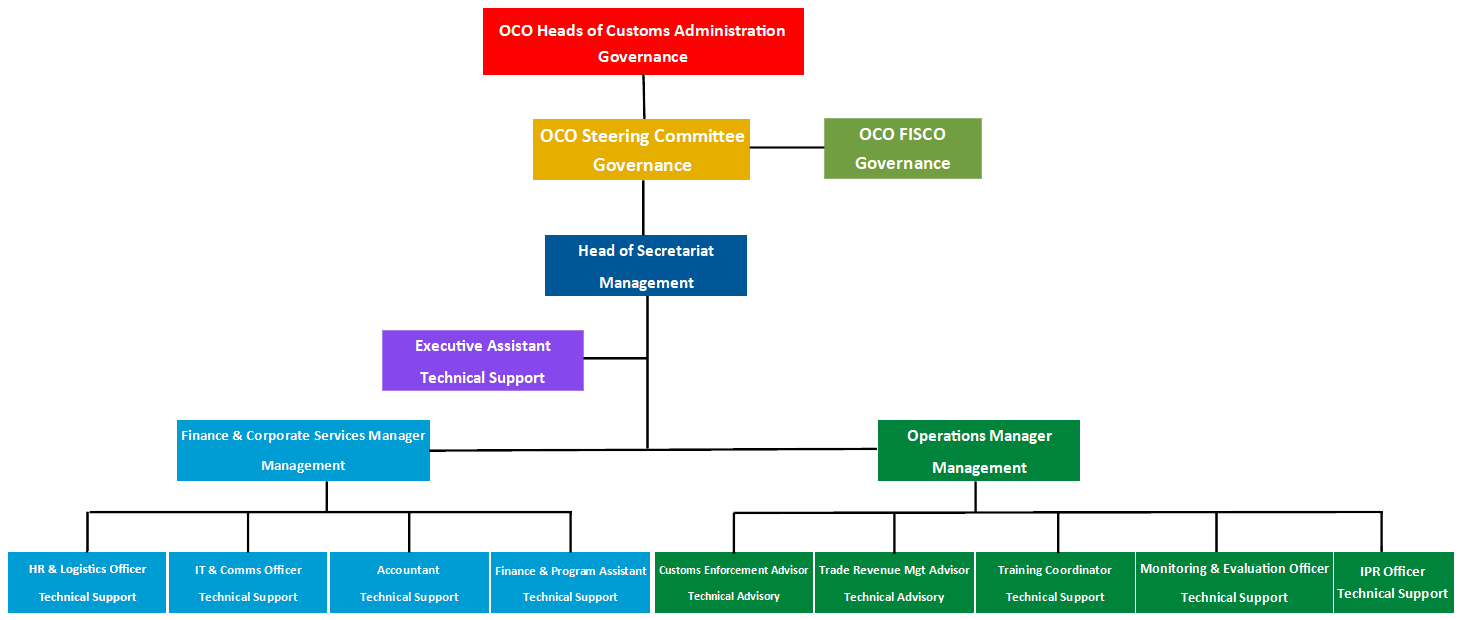
OCO Organisational Structure

Priority 1

Customs Leadership

Overall Objective: Enhance the Leadership capability to enable Customs’ modernisation reforms

Develop and strengthen Members’ leadership capabilities at executive management and supervisory levels

* Strengthen the implementation of the current OCO Professional Standards Framework (OPSF).
* Facilitate executive and management programmes with a continued focus on women in leadership
* Develop mentoring and internship programmes and modules
* Develop front line supervision training
* Develop a train the trainer program
* Provide ethics and governance training

Strengthen organisational development for the future

* Conduct annual training needs analysis for individual Members
* Facilitate and promote the use of relevant WCO and OCO E-learning modules
* Develop a Gender Equality Plan for Customs
* Policy and Legislative skill development
* Develop a pathway to be a recognised accredited Customs training provider
* Secretariat and Member engagement at regional and international forums.
* Build and maintain a Customs Expert database

Strengthen succession planning

  • * Development of executive and leadership courses for Member administrations
  • * Conduct a regional workshop on Corporate Governance and Succession Planning for Member administrations