
Read this document in French:
Click on the language tab found at the bottom right of your screen and select French.
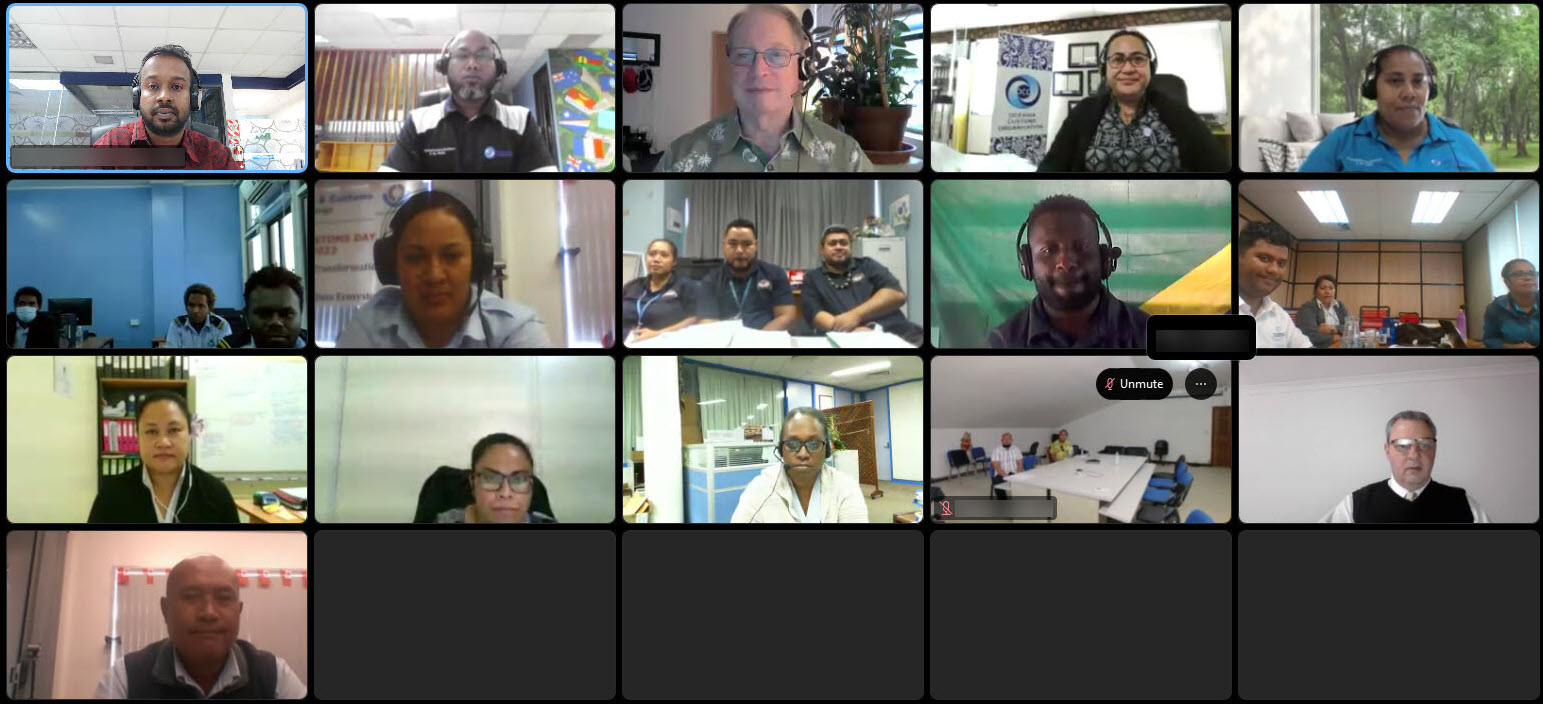
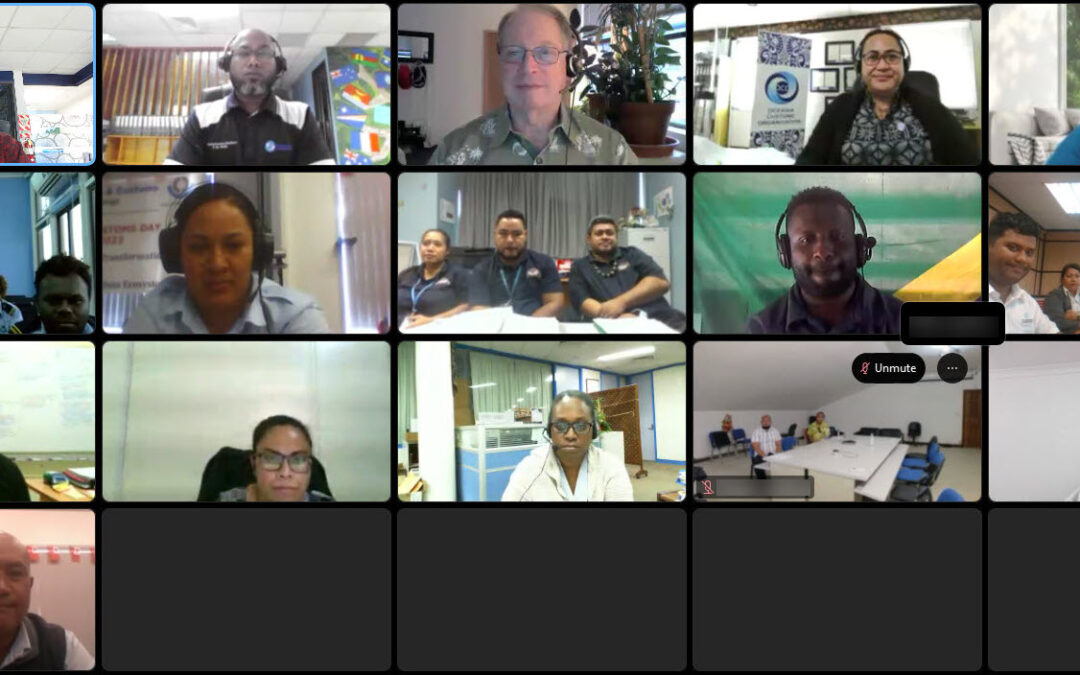
Suva, Fiji, 23 September, 2022: Last month, the Oceania Customs Organisation and the United States Patent and Trademark Office (USPTO) trained Customs officers from selected OCO member countries on Intellectual Property Rights Legislative Training.
This virtual training was conducted to build OCO members’ capacity in legal drafting and was attended by Customs officers who were also contact points for IPR in their administrations as well as IPR legal experts and representatives of OCO members’ Solicitor General offices.
The training was critical as Intellectual Property Rights expertise in Border Control Units particularly in Cluster 1 and Cluster 2 countries has not been fully developed and needed to be enhanced.
Cluster 1 countries are those that have no IPR laws, which are Niue, Timor Leste, Tuvalu and Kiribati. Cluster 2 are countries that have some IPR laws which are Federated States of Micronesia, Kiribati, Nauru, Palau, Solomon Islands and Vanuatu. Countries that are in Cluster 3 are Samoa, Tonga, Fiji, PNG, and Australia who have IPR laws and Customs Enforcement Mechanisms.
The training also targeted countries who were willing to commence legal drafting processes and also seek assistance from international partners such as the USPTO or other member countries that have strong IPR legislative frameworks. Ideally, the target of the OCO is to have a strong and solid IPR Legislative Framework for the 14 selected members.
The OCO and the USPTO acknowledged the immense contribution shared by the IP and Legal Experts from our members, the Australian Border Force, the Fiji Revenue and Customs Services, and the Intellectual Property Office of Papua New Guinea during the virtual training. Their presentations and knowledge shared showcased a deep insight into the regional perspective on how Intellectual Property Laws operate and are enforced at the Border Control Units.
ENDS
For more information, queries, or interview requests, please email MediaOCO@ocosec.org
About OCO: OCO is a grouping of 23 customs administrations in the Pacific region. It facilitates regional cooperation, information sharing and capacity building of its members with the overall target of supporting economic growth and improved border security in the Pacific.