
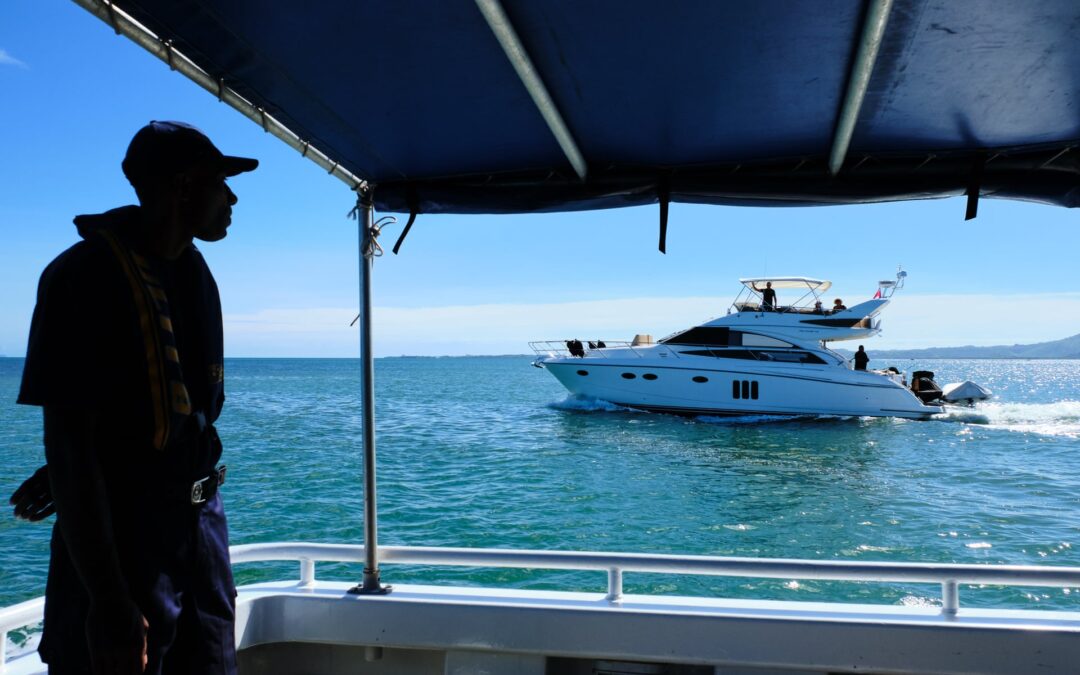
(Excerpt: The Guardian Article, The new drug highway: Pacific Islands at center of cocaine trafficking boom, dated 24 June 2019)
It is the drug route you’ve never heard of: a multi billion-dollar operation involving cocaine and methamphetamine being packed into the hulls of sailing boats in the US and Latin America and transported to Australia via South Pacific islands more often thought of as holiday destinations than narcotics hubs.
In the past five years there has been an explosion in the number of boats, sometimes carrying more than a tonne of cocaine, making the journey across the Pacific Ocean to feed Australia’s growing and very lucrative drug habit.
Caught in the middle are countries such as Fiji, which the Guardian visited as part of a series investigating the Pacific drug highway. Other countries affected include Vanuatu, Papua New Guinea, Tonga and New Caledonia, whose waters and beaches are being used as storage grounds for billions of dollars worth of illicit drugs.
Hundreds of kilograms of cocaine have washed up on remote Pacific beaches, ships laden with drugs have run aground on far-flung coral reefs, and locals have discovered huge caches of drugs stored in underwater nets attached to GPS beacons.
“Draw a direct line between Bogotá and Canberra and it goes straight through the islands,” says Dr Andreas Schloenhardt, professor of criminal law at the University of Queensland.
The Pacific has been a transit point in the drug route for decades, but law enforcement and security analysts told the Guardian the use of the route appears to have increased dramatically in the past five years. Since 2014, Australian federal police have been involved in the seizure of about 7.5 tonnes of cocaine shipped in small vessels such as yachts through the region and intended for Australia.
 One wall of the Oceania Customs Organisation office in downtown Suva is taken up by a huge colourful map of the Pacific, from Australia and Palau in the west through to French Polynesia in the east. Tevita Tupou walks over to it to show the extent of the challenge facing law enforcement through the region, whom he says are engaged in a “David and Goliath” battle against a creative, well-funded, constantly innovating criminal enemy.
“We cover one-third of the world’s mass,” he says, waving toward the map. Tupou checks off challenges on his fingers. “Porous borders, maritime borders, geographical spread, limited resources. That’s our operating environment.” He laughs. “Where do you start?”
“This is probably the fight of our generation, we lose this now, we are gone,” Tupou says.
Tupou believes Fiji and its Pacific neighbours can never return to a time before hard drugs were a domestic problem. The genie is out of the bottle.
“You cannot eradicate the issue of drugs, because there will always be a demand, there’s always money to be made out of it, but we can make it hard for them,” he says. “That’s our endgame … the only thing we can do is just make crime random.”
To view the full article, please visit The Guardian official website at https://www.theguardian.com/world/2019/jun/24/the-new-drug-highway-pacific-islands-at-centre-of-cocaine-trafficking-boom