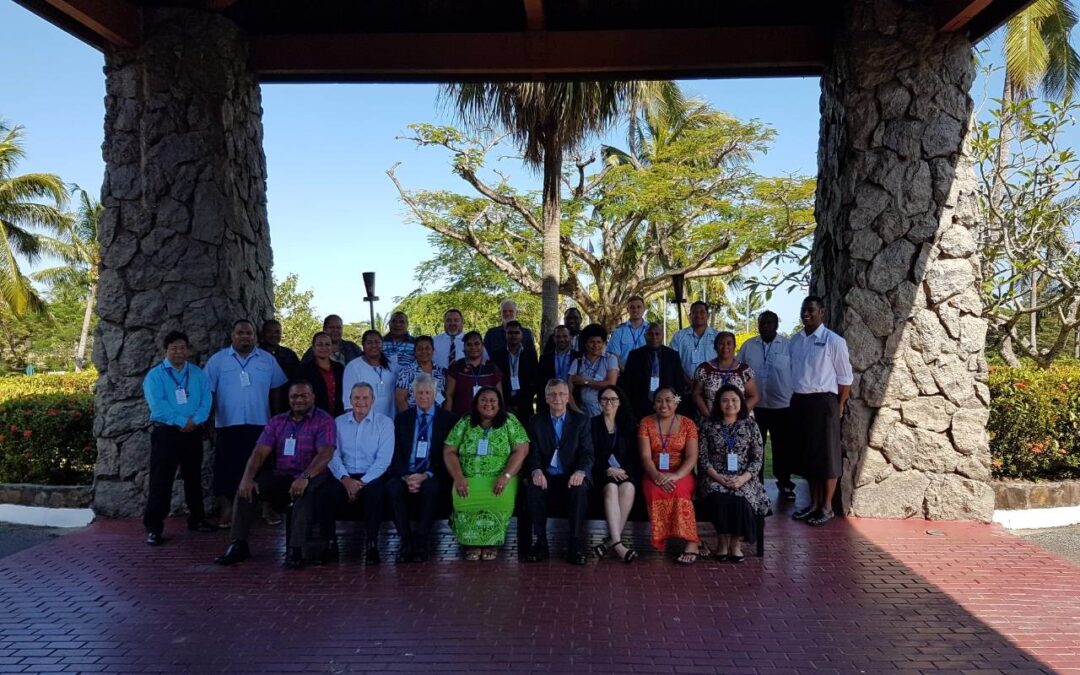
 More than 23 personnel from the Pacific island countries [PICs] from both Tax and Customs administrations underwent a five-day Regional Workshop on ISORA /ISOCA conducted by the IMF. The Training was organized and funded by PFTAC. OCO, PFTAC and PITAA. Members were in attendance at the 5-day workshop at the Novotel Nadi that ran from the 16th – 20th April.
The training was to introduce the use of the ISORA & ISOCA data capture capabilities for respective member countries. ISORA & ISOCA is a single, regular survey on Tax /Customs administration using common questions and definition that have been developed in partnership with international organizations (CIAT, IMF, IOTA, OECD, WCO) through an on-line platform (the IMF’s RA-FIT). Data capture by members on respective business functions was an area that PICs would need to work intentionally on to fully realise the benefit of the survey.
Participants were taught on how to effectively populate the system with relevant organisational information that can be used for comparative value against other Tax & Customs organisations with same economy of scale. Another key the benefit of ISORA & ISOCA is using the (historical time series) data for analytical and comparative purposes but, also identifying policy and administrative inefficiencies. The same data is then used to make informed diagnosis into areas of business improvements which can also be used by international organizations, donors and government.
OCO continues to work collaboratively with its key partners in enhancing human capability of its Members.