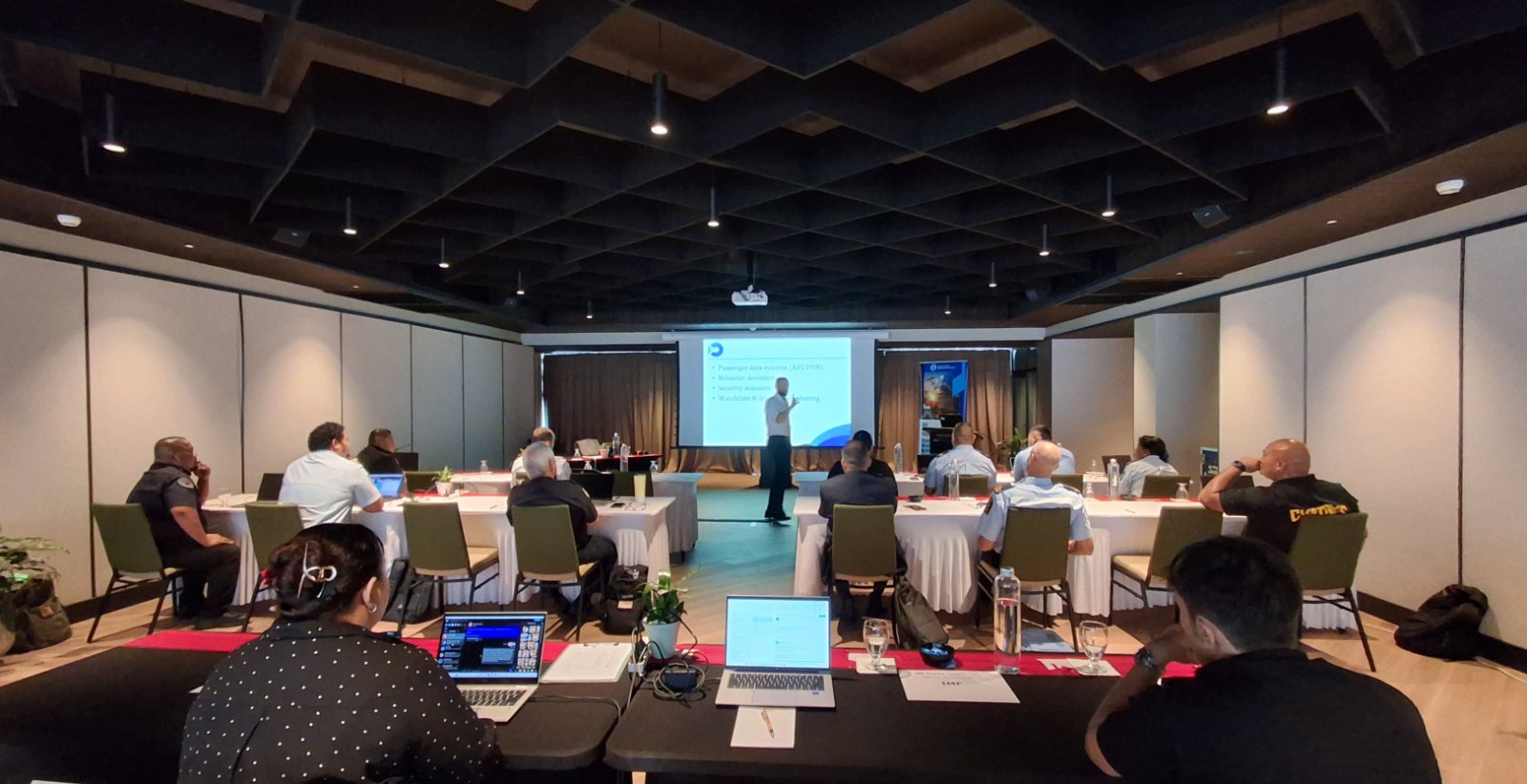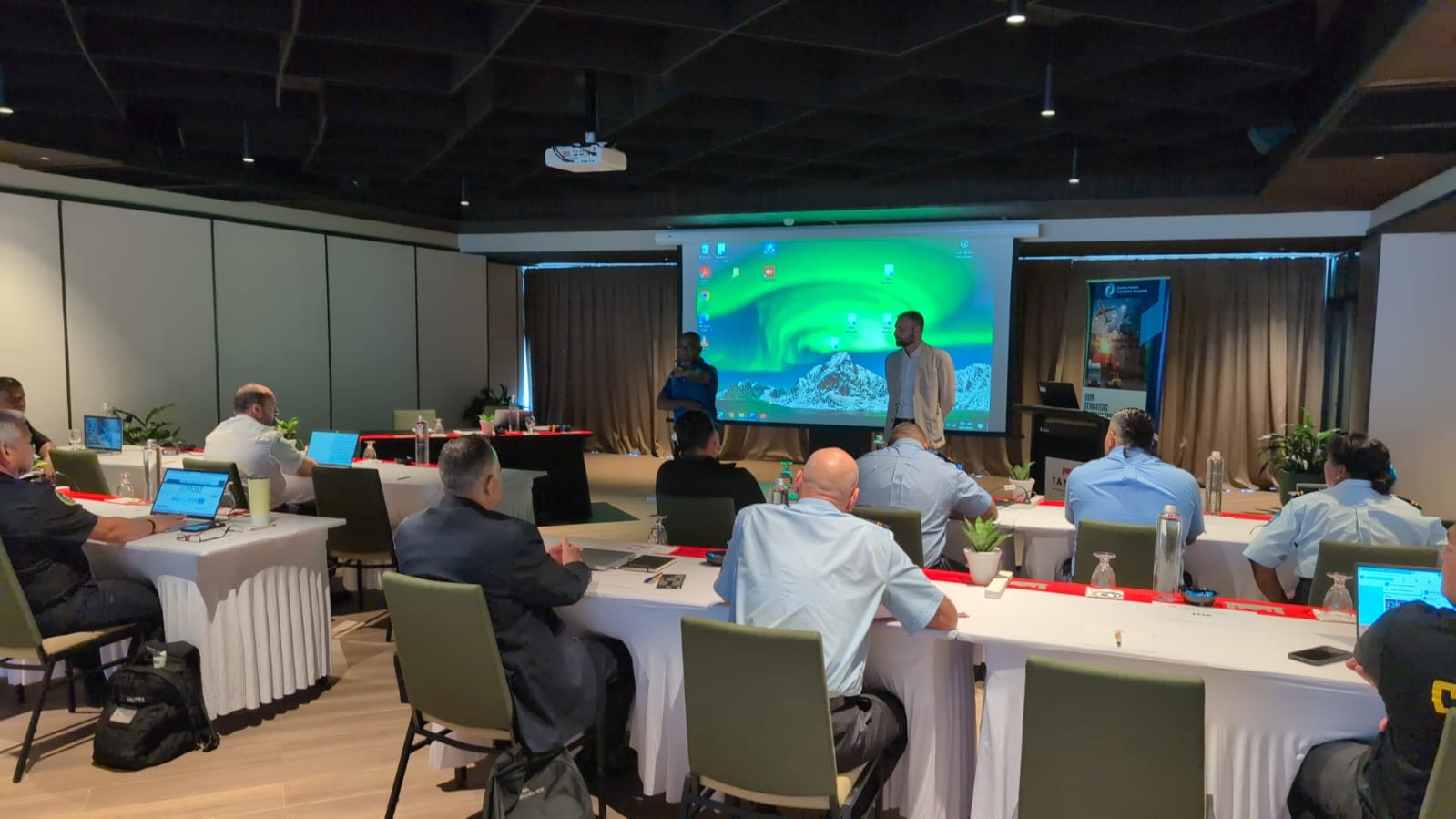
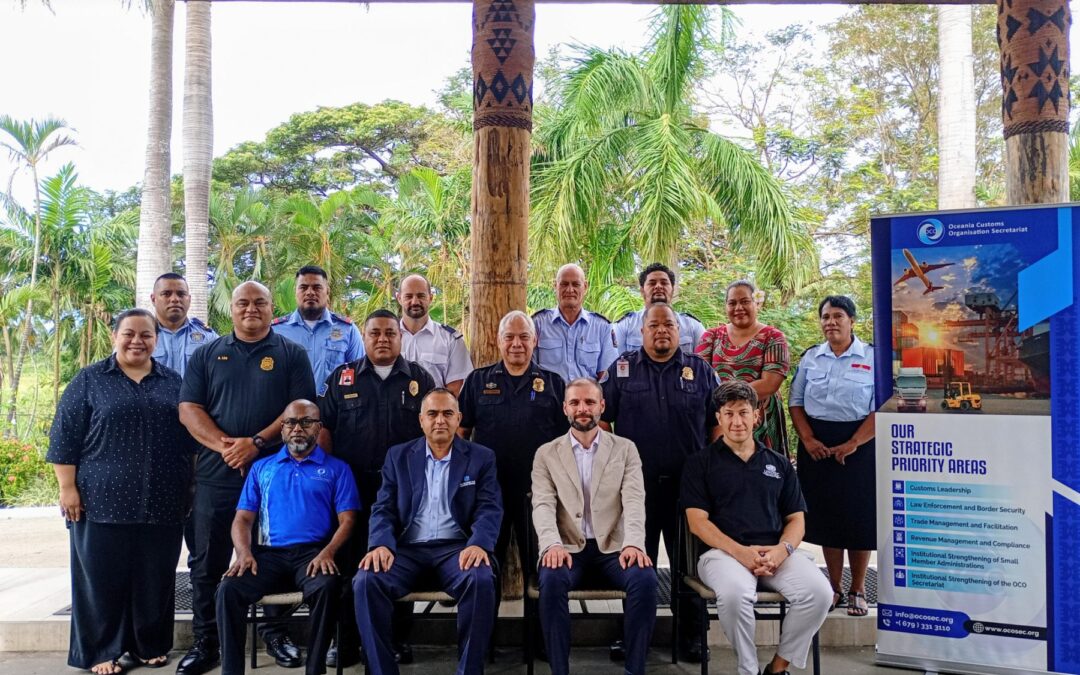
Nadi, Fiji — Customs officers from across the Pacific are gathering in Nadi this week for a four-day regional training programme designed to strengthen their ability to identify and intercept high-risk travellers at airport border control.
The Regional Training on Risk Assessment, Passenger Profiling, and Targeting at Airport Border Control runs from April 27-30 and brings together operational supervisory-level officers from French Polynesia, American Samoa, Cook Islands, Guam, Kiribati, , Federated States of Micronesia, Nauru, Niue, Palau, Tuvalu and Tokelau.
The programme is delivered by the Oceania Customs Organisation (OCO) in collaboration with the United Nations Office on Drugs and Crime (UNODC), the Fiji Revenue and Customs Service (FRCS), and the Australian Border Force (ABF).
Pacific Island countries are managing a steady rise in cross-border passenger traffic, and with it, heightened exposure to drug trafficking, human trafficking, and other transnational crimes. Customs officers working at airport primary and secondary screening points have identified clear capacity gaps in passenger stream risk management and this training is a direct response to those gaps.
OCO Operations Manager, Mrs Laisa Kubuabola-Naivalurua said the programme addressed some of the most pressing operational challenges facing frontline Customs officers in the region today.
"Our officers are the first line of defence at our borders," Mrs Naivalurua-Kubuabola said. "This training gives them the practical skills and the regional knowledge they need to make faster, sharper, and more accurate decisions at the border."
The four-day programme combines classroom learning with practical simulations, , and real-world case studies drawn from Customs operations across the region.
Sessions will cover intelligence-led risk assessment, behavioural and document-based profiling techniques, Advance Passenger Information (API) and Passenger Name Record (PNR) capabilities, travel document verification, and strategies for improving targeting accuracy at the border.
Each of the three facilitating agencies brings distinct expertise to the programme. UNODC will lead on intelligence-driven risk assessment and operational profiling. FRCS will deliver regional case studies and a tabletop exercise drawing on Fiji's own border enforcement experience. ABF will cover immigration risk management and traveller document verification.
The training supports key international frameworks, including the World Customs Organization SAFE Framework and the United Nations Convention against Transnational Organized Crime. Regionally, it responds directly to the Boe Declaration on Regional Security and the goals of the OCO Strategic Plan, which calls for stronger cooperation and capacity building for frontline Customs officers across the Pacific.
Upon completion, participants are expected to return to their home administrations better equipped to apply standardised risk assessment procedures, improve targeting accuracy, and contribute to a more coordinated regional approach to border security. ENDS
The Oceania Customs Organisation (OCO) is an intergovernmental organisation supporting 24 Pacific member administrations to strengthen Customs capacity, improve revenue collection, and facilitate legitimate trade. Visit www.ocosec.org.