
NADI, FIJI — Every year, Pacific Island governments lose revenue they are owed because goods clear ports and airports without proper checks. This week, the Oceania Customs Organisation (OCO) is taking direct action to address that.
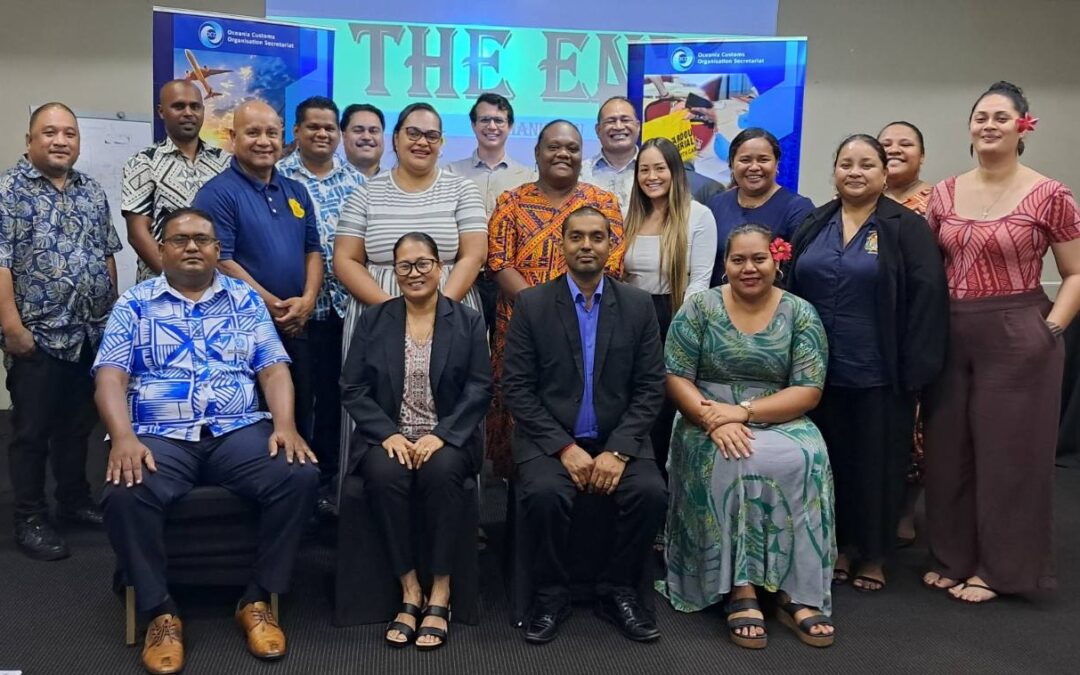
From 23 to 26 March 2026, Customs officers from 12 Pacific Island administrations gathered at the Novotel Hotel in Nadi, Fiji, for the OCO Post-Clearance Audit (PCA) Train-the-Trainers Workshop. Over four days, participants enhanced their skills to verify whether importers declared the right value for their goods, paid the correct duties, and followed trade rules — work that directly protects the public money Pacific governments use to fund schools, hospitals, and essential services.
Post-Clearance Audit is the system that allows Customs administrations to go back after goods have been released and check trader compliance. It is a globally recognised, risk-based approach that reduces pressure on border inspections while improving the accuracy of revenue collection. Yet across most of the Pacific, PCA remains underdeveloped or absent entirely.
OCO’s own regional research in 2023 found that PCA is one of the least-implemented Customs functions among its member administrations, with only Fiji, Papua New Guinea, and Vanuatu having fully established PCA operations.
The workshop is designed to close that gap — and to do it in a way that lasts. Facilitated by regional experts trained under the World Customs Organization (WCO) Master Trainer Programme, participants are learning not only how to conduct PCA, but how to train others when they return home. They are developing practical skills in risk assessment, document examination, compliance response, and audit planning, all aligned with the OCO PCA Manual and WCO PCA Guidelines.
Participating administrations included American Samoa, CNMI, FSM, French Polynesia, Guam, Nauru, New Caledonia, Niue, RMI, Tokelau, Tuvalu, and Wallis and Futuna.
The training does not stop at the end of the workshop. From 30 March to 10 April 2026, officers from Tuvalu and the Federated States of Micronesia will undertake a hands-on twinning attachment with the Fiji Revenue and Customs Service, working directly alongside FRCS teams at the Nadi and Lautoka offices. They will observe and participate in live PCA operations across both air and sea cargo environments — turning classroom learning into real, applied experience they can take home and put to use.
“Pacific Customs administrations are on the frontline of revenue protection for their governments,” said Ms Laisa Naivalurua, OCO Operations Manager. “This initiative is about giving them the tools, the skills, and the peer network to do that job more effectively — not just for this year, but for the long term.”
The initiative aligns with the OCO Strategic Plan 2022–2027, which prioritises fair and efficient revenue collection across the Pacific, and the Pacific Regional Trade Facilitation Strategy 2024. It also contributes to UN Sustainable Development Goal 17, which calls for stronger institutions and regional partnerships to support sustainable development.
ENDS