
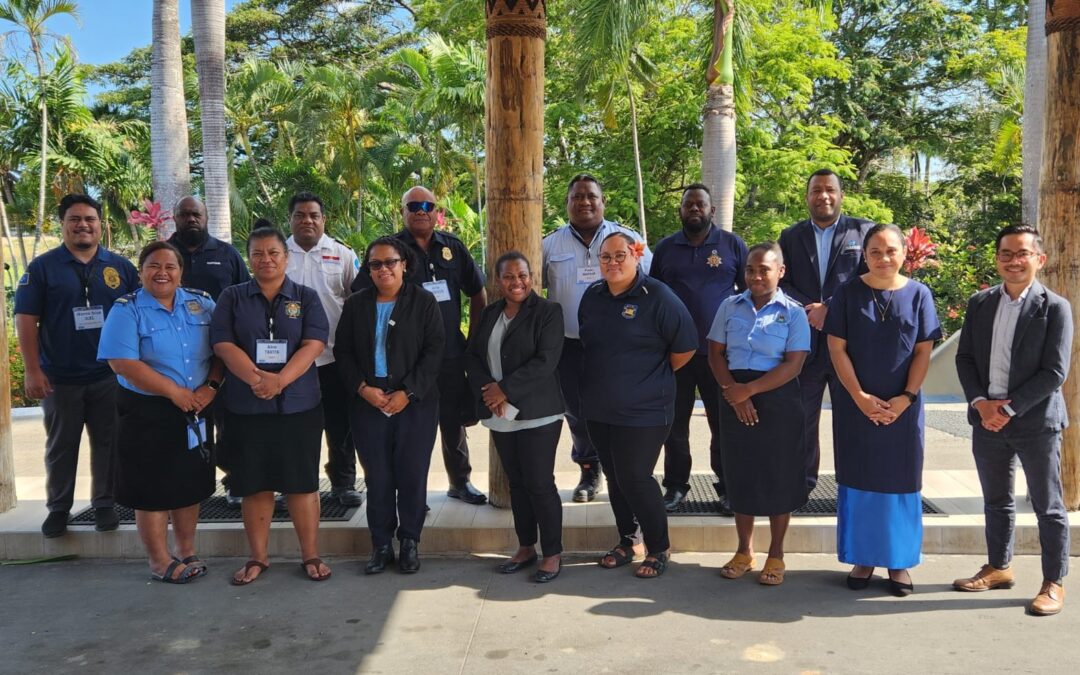
NADI, Fiji, 21 September, 2026 — The Oceania Customs Organisation (OCO) and the United States Patent and Trademark Office (USPTO) are delivering a regional workshop under the OCO-USPTO Memorandum of Understanding to strengthen enforcement against trade in counterfeit goods. The workshop is being held at Tanoa International Hotel, Nadi, Fiji from 21-23 September 2026.
Twelve Pacific Customs administrations including Fiji, Federated States of Micronesia, Kiribati, Nauru, Niue, Palau, Papua New Guinea, Samoa, Solomon Islands, Tonga, Tuvalu and Vanuatu will be represented at the regional workshop with 43 percent female participants.
The workshop program is designed to prioritize counterfeit goods that pose severe health, safety and environmental risks highlighting the essential role that Customs serves at the border to protect communities and consumers. Customs officers participating in the workshop will share national experiences on emerging enforcement trends, key challenges and lessons learned, fostering knowledge exchange and mutual learning across the region.
"Counterfeit goods are more than a border enforcement issue. They can affect many areas of our daily lives, from medicines and electrical products to consumer goods and items used in government and commercial supply chains. Customs officers are at the frontline of facilitating legitimate trade with the responsibility of identifying and intercepting counterfeit goods that could harm our communities and economies. Trainings such as this strengthens the skills and capabilities of our Customs officers and reinforces the importance of cooperation in tackling counterfeit trade. By investing in our people, we are strengthening our ability to protect communities,” said Mrs Laisiana Tugaga, Head of the OCO Secretariat
The production and trafficking of counterfeit goods is commonly linked to transnational organized crime syndicates. These criminal networks exploit international supply chains, e-commerce platforms, and border vulnerabilities to generate illicit profits, often using the proceeds to finance other serious criminal activities. Strengthened customs vigilance is therefore critical not only for protecting consumers and legitimate businesses, but also for disrupting broader criminal enterprises operating across borders.
Through expert-led sessions, practical exercises, case studies and collaborative discussions, participants will strengthen their ability to identify suspicious consignments, apply effective Intellectual Property Rights (IPR) enforcement practices, detain suspected counterfeit goods within legislative mandates, enhance interagency coordination and improve public-private cooperation.
With technical support from the distinguished panel of speakers and facilitators, practical outcomes are expected from this workshop including the creation of a Regional IPR Working Group for OCO members to strengthen intelligence data sharing and enhance cross-border cooperation especially in the fight against transnational organised criminal activity in the Pacific region.
ENDS