
Suva, Fiji – 12 November 2025 – Pacific Island nations finished their three-part workshop series on creating trusted trader programs, with the final session focusing on how to put these programs into practice.
Phase I and II of the workshops were completed in September and October while Phase III completed in November focussed on implementation and sustainability, addressing the unique challenges faced by small island developing states in establishing and maintaining trusted trader programmes with limited resources and smaller trade volumes.
Nancy Oraka, Oceania Customs Organisation Head of Secretariat, emphasised the significance of the final phase: “We’re now focused on translating the frameworks developed in earlier phases into operational programmes that deliver tangible benefits to Pacific businesses and Customs administrations.”
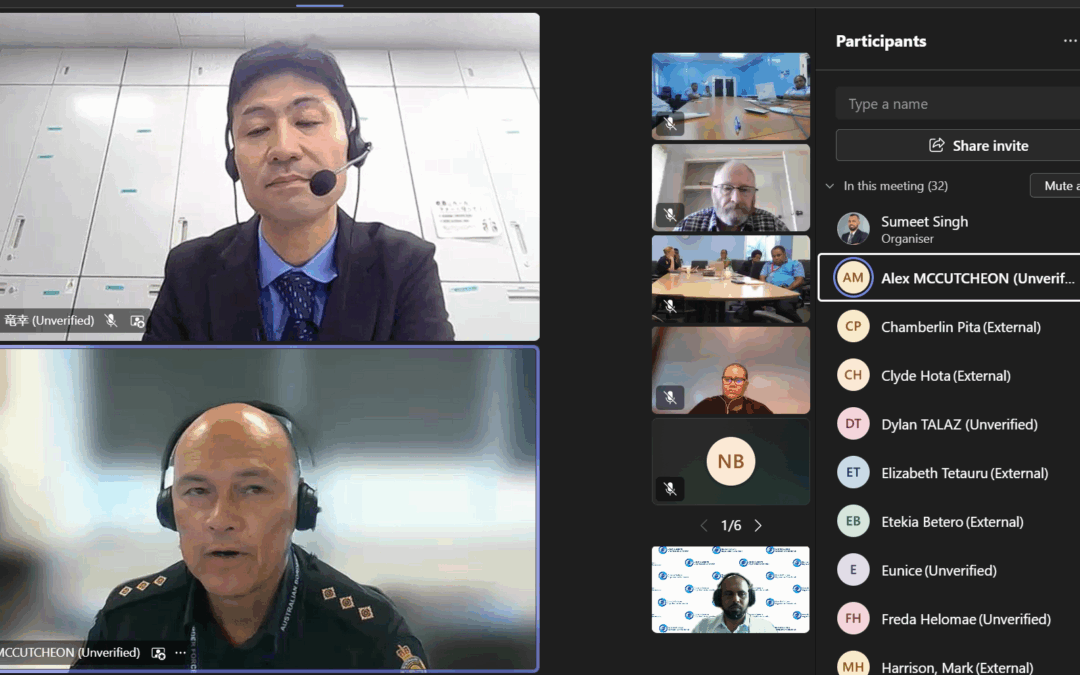
The workshop sessions featured expert presentations from Japan Customs, which operates a comprehensive AEO system covering more than 750 companies, and Australia’s Border Force, which shared insights from their Trusted Trader programme including monitoring and evaluation best practices.
Japan demonstrated sophisticated support systems, including dedicated account managers for each certified company, specialised training for Customs officers, and information sharing through newsletters, seminars, and websites.
Australia’s Border Force outlined comprehensive monitoring systems with annual check-ins, four-year reviews, corrective procedures, and financial monitoring to ensure programs work effectively.
The Centre for Customs and Excise Studies (CCES) made a strong case for Pacific nations working together, showing how they can overcome limited resources by sharing standards, pooling resources, and negotiating collectively.
Silivia Vosa from CCES outlined four key principles for Pacific sustainability: shared standards based on the OCO framework, pooled resources for IT systems and training, creating critical mass by working together, and building resilience through OCO coordination.
A critical decision emerged regarding mutual recognition arrangements (MRAs), with experts advocating for a Pacific Regional MRA rather than individual bilateral agreements. This approach would reduce negotiation burden from 24 separate negotiations to just one per external partner for six Pacific Island countries.
The workshops highlighted the success of regional approaches, pointing to Latin America where 11 countries including Argentina, Brazil, Chile, Colombia and Peru work together. This shared approach cut costs through joint inspections, shared computer systems, and stronger negotiating power globally. Pacific Island countries are now developing national action plans based on workshop guidance, with pilot programmes expected to launch in 2026. The goal is to create a Pacific Trusted Trader Network that provides expedited processing for certified businesses across the region.
Key implementation elements identified include common certification standards using the OCO Model Framework, mutual acceptance of validations between Pacific countries, shared IT infrastructure for data exchange, and coordinated approaches to external partner MRAs.
The initiative directly supports regional integration goals under the PACER Plus Agreement and aligns with World Trade Organization Trade Facilitation Agreement commitments, particularly Article 7.7 on authorised operator programmes.
For Pacific businesses, successful AEO implementation promises reduced Customs inspections, faster clearance times, deferred duty payments, priority handling during peak periods, and simplified documentation requirements – addressing long-standing challenges of high trade costs in geographically isolated markets.
The three-phase workshop series, supported by Japan Customs, CCES, Australian Border Force, and the Fiji Revenue and Customs Service, represents a significant step toward modernising Customs procedures throughout the Pacific region.
OCO will continue providing technical assistance as countries implement their national frameworks, with ongoing support for establishing functional mutual recognition systems and negotiating external partnerships as a regional bloc.
ENDS