
SUVA, FIJI – 10 March 2026 – Fifty-six women Customs officers from across the Pacific have completed a regional intelligence management alumni programme and signed a joint commitment to advance women’s leadership in border security.
The graduates, from 16 countries and territories, completed the Pacific Women’s Professional Development Program (PWPDP) – Advancing Intelligence Management on Tuesday. The three-week virtual programme ran from 19 February to 10 March 2026.
They also signed a Commitment Statement pledging to embed intelligence as a shared mindset — not just a specialist function — across Customs administrations throughout the Pacific.
The programme is run by the Oceania Customs Organisation (OCO), the Australian Border Force (ABF) and RMIT University.
OCO Acting Head of Secretariat Latha Reardon told graduates their achievements carried a clear message.
“In Customs — a profession that has traditionally been male-dominated — women belong in leadership. You are not asking for permission to lead. You are taking your rightful place,” she said.
She acknowledged the demands the programme had placed on participants.
“Many of you have balanced this learning with full-time work, family responsibilities and community commitments,” Ms Reardon said. “I encourage you to take what you have learned back to your agencies: share it, mentor other women, and be visible champions for inclusive leadership.”
ABF’s First Secretary to Samoa, Inspector Michelle Bond said the investment went beyond skills training.
“Strong intelligence leadership makes our borders more resilient and programmes like this are how we build it, together,” she said.
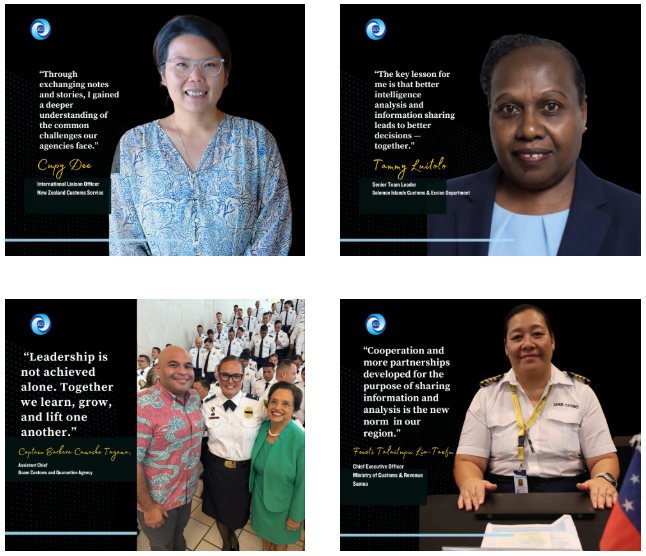
Samoa’s Ministry of Customs and Revenue Chief Executive Officer, Fonoti Talaitupu Lia-Taefu, said the Pacific region holds a wealth of data from diverse sources, supported by a range of programmes and regional agencies with shared interests in Customs.
“Cooperation and more partnerships developed for the purpose of sharing information and analysis is the new norm in our region. With this amount of data, modernisation in systems and consideration of AI as a tool to assist us in analysing the huge volume of data to allow timely decision making — this is a foreseen change in the landscape of intelligence management in the Pacific for our Customs agencies,” she said.
New Zealand Customs Service International Liaison Officer Cupy Dee said she had gained as much from her fellow participants as from the curriculum.
“Through exchanging notes and stories, I gained a deeper understanding of the common challenges our agencies face. Most importantly, I was able to build connections with women across the Pacific reinforcing the value of collaboration and solidarity,” Ms Dee said.
Captain Barbara Camacho Tayama, Assistant Chief of Guam’s Customs and Quarantine Agency, said the programme had changed how her team approached operations.
“This means improving how we collect, analyse and share information so intelligence guides operations — not just supports them after the fact,” she said. “Leadership is not achieved alone. Together we learn, grow, and lift one another.”
Since its launch in 2022, the PWPDP has built a growing network of women Customs leaders across the region. Five Pacific Customs administrations are now headed by women.
Ms Reardon said the graduates’ example would reach far beyond the classroom.
“Somewhere in your administration, a younger officer is watching you and thinking: if she can do it, maybe I can too. That is the quiet, but powerful, impact of your example.”
OCO Training Coordinator Stephanie Waqanivavalagi, herself a PWPDP graduate, said the programme had been transformative building her leadership skills and creating a regional network for collaboration and information sharing.
The Pacific Women’s Professional Development Program is a joint initiative of the OCO, the ABF and RMIT University. It aims to build leadership skills, strengthen professional networks, and advance gender equality across Customs administrations in the Pacific region.
-ENDS-