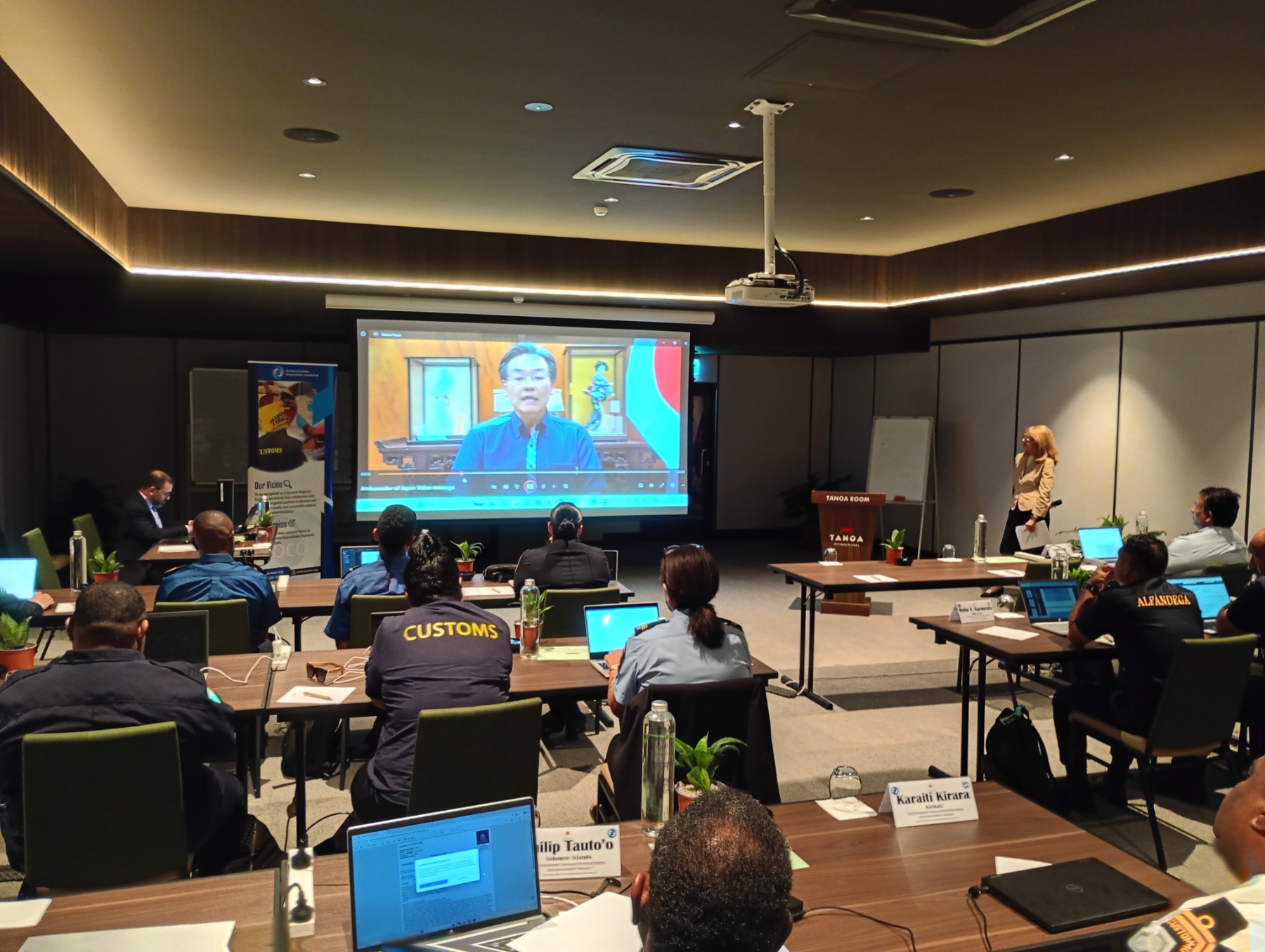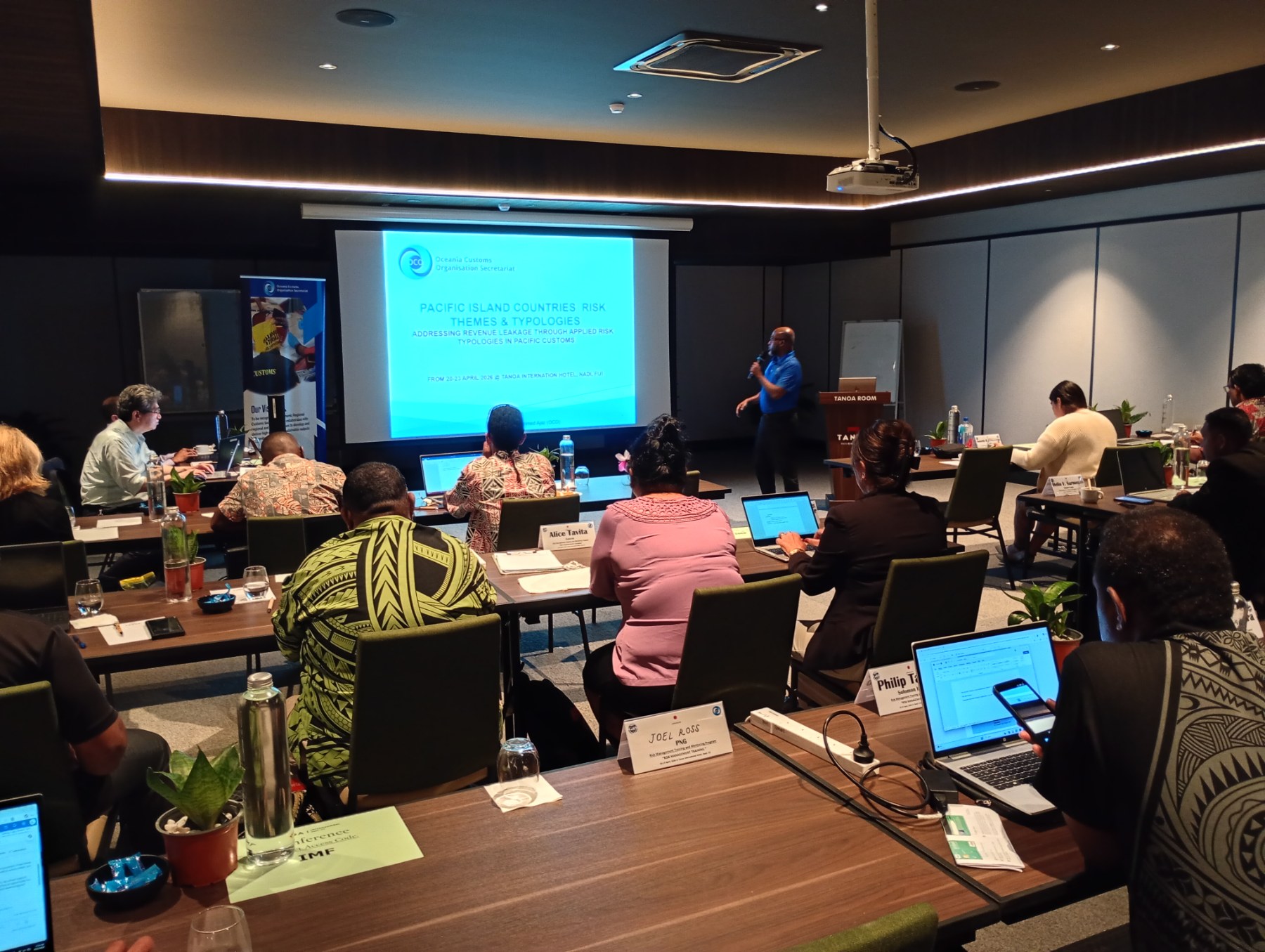
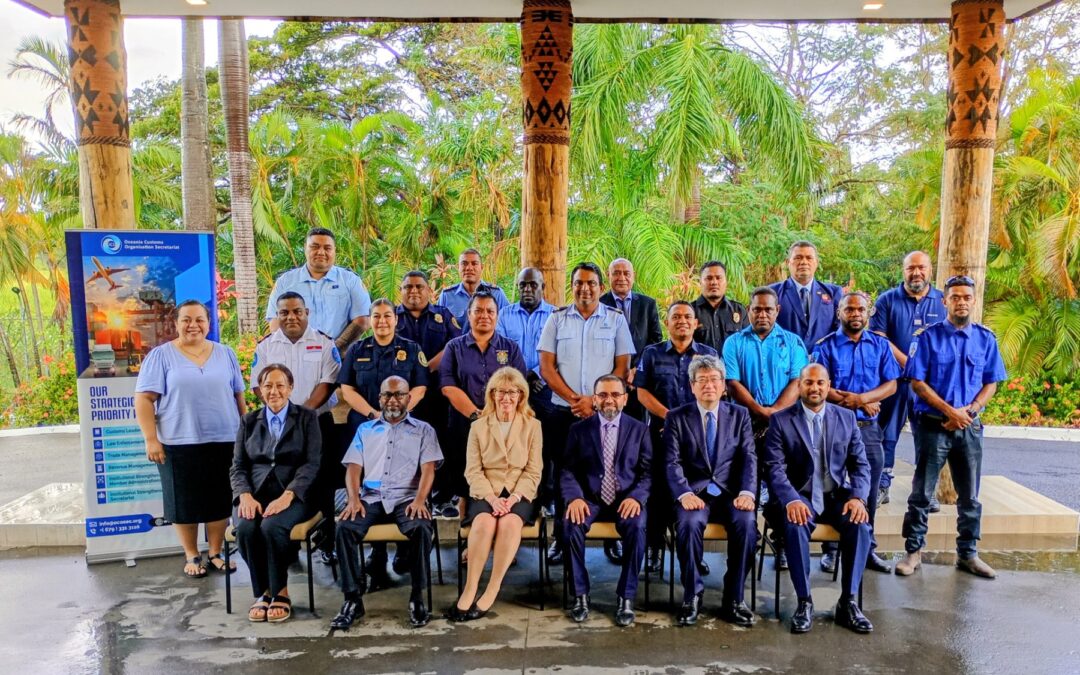
Nadi, Fiji — Customs officers from across the Pacific are in Nadi this week to attend a training and mentoring programme that aims to move small Pacific Customs administrations away from inspecting every shipment by hand and towards a smarter, data-driven approach to border control.
The Risk Management Training and Mentoring Programme, delivered by the Oceania Customs Organisation (OCO) in partnership with the International Monetary Fund (IMF), started on Monday, April 20 and ends today.
It will be followed by a six-week online mentoring programme running from Friday, April 24 to May 29 providing targeted support to selected small Customs administrations as they begin implementing what they have learned.
OCO Operations Manager, Mrs Laisa Kubuabola-Naivalurua said trade volumes are rising across the Pacific and inspecting every consignment at the border is no longer an option.
"We cannot inspect everything. But we can be smarter about what we inspect, and why," Mrs Kubuabola-Naivalurua said. "This programme gives our officers the tools and the confidence to make that shift from reacting to what arrives at the border, to actively targeting what poses the greatest risk."
The programme is structured in two phases. The first, a four-day awareness training which ends today, builds a foundational understanding of risk management principles across all participating administrations, drawing on the WCO Risk Management Compendium.
Participants come from intelligence, investigation, and audit backgrounds across all OCO member administrations with funding support from IMF, Pacific Financial Technical Assistance Centre (PFTAC) and OCO.
The second phase is a dedicated mentoring programme for Federated States of Micronesia, Nauru, and Tuvalu — three administrations identified through OCO's IMPACT project Country Gap Analysis seeking scaling of operational capacity in intelligence led risk management
Starting with an in-person coaching session on Friday April 24, the mentoring programme then moves online, guiding participants through the development of real risk profiles and importer targeting criteria for their home administrations. A structured Importer Risk Profile Template will help officers track importer behaviour and build evidence-based profiles over time.
Facilitators include an IMF subject matter expert and a WCO Mercator Trade Programme alumnus from the Fiji Revenue and Customs Service, working alongside the OCO Secretariat.
By the end of the programme, participating officers are expected to have moved their administrations closer to a selectivity model, one that produces higher inspection hit rates, faster clearance times for compliant traders, and stronger defences against smuggling and commercial fraud.
The initiative aligns with the WCO SAFE Framework, the UN Convention against Transnational Organized Crime, and the OCO Strategic Plan's goal of strengthening intelligence-driven risk management capacity across the Pacific.
ENDS
The Oceania Customs Organisation (OCO) is the regional intergovernmental body supporting Customs administrations across the Pacific. Its membership spans Melanesia, Polynesia, and Micronesia.